I'm currently converting my factory dual battery setup to separate them into a start and house battery, and add a Blue Sea SI-ACR automatic charging relay and "Off/On/Combine" switch. I've done this on other boats and what I've learned is that almost every boat seems to be different, even the same brand from year to year. I really appreciate that Bennington shares the schematics so you can figure this out on your own or share with a competent marine mechanic to do it. Bennington's current "dual battery" setup is a switch "OFF", "1", "2", or "1+2". With that last position, you can parallel 2 in a pinch and charge them when combined as long as they're the same battery type in about the same condition. There are many pro's and cons to that I won't go into.
Another thing I've learned is that each engine package has its own unique requirements. The Verado I have, and any Merc with Digital Throttle and Shift (DTS) and integrated power steering is especially unique because the electronics are very sensitive to voltage level, but it's still quite manageable with the proper information. The key thing is you MUST minimize the number of intermediate connections as they're eventually going to corrode, usually where you can't see the darn thing. Merc specifies several connections that should go directly to the "start" side battery - (1) engine, (2) DTS, (3) power steering pump, and (4) Smartcraft harness. Usually there isn't really a need to switch them "OFF" other than maybe for security, so I don't bother passing that through the switch. Basically, everything related to the engine goes to the "start" side, all else to the "house" side. Some boat manufacturers mix and match these connections in ways that can create problems.
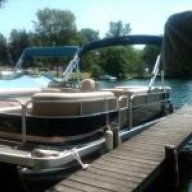
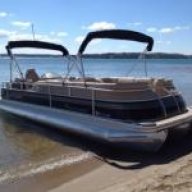
When I checked my rigging it was mostly right, but I'm correcting a couple things as I go. The 2275RCW with 2 port batteries and 55g center fuel tank (ESP) has precious little space under that rear lounge for this setup, using Group 31 batteries, so it takes some creativity. I noticed Gerry's RCW picture was quite a bit different than mine and very clean(!). Mine looks like a rat's nest, and the batteries will take major contortions to remove. Hopefully in another couple weeks I will have worked through it and can improve things a bit. Ultimately, I'll just set it to "ON" during season and let the ACR do the rest for me, then switch it all to "OFF" in the off season or for long idle periods, along with a strong charge of both AGM's as a last step.
A note for those that might decide to DIY. Just like electrical codes for your home, there are special things to know about wiring in boats, especially closed spaces, specified by ABYC. That's what you pay the pro's to know, but if you go on your own, never scrimp on marine grade wire, heat shrink adhesive lined terminals, appropriate wire gauges, etc. I've seen fire in boats several times and it's a terrifying thing. If there's any doubt whatsoever, hire a pro, as some suggested here.