I’ve had my LX for a little over a year. It has dual batteries And a 4 position switch. I have been running the boat in the 1+2 position. Sometimes we anchor and run the stereo for 3 to 4 hours. Should I be switching over to battery one while anchored and then switch to 1and 2 to start? I don’t want to ever be in a position where we have drained both batteries. Thanks for any advice!

Navigation
Install the app
How to install the app on iOS
Follow along with the video below to see how to install our site as a web app on your home screen.
Note: This feature may not be available in some browsers.
More options
You are using an out of date browser. It may not display this or other websites correctly.
You should upgrade or use an alternative browser.
You should upgrade or use an alternative browser.
Proper use of 2 battery switch
- Thread starter Pontoof
- Start date

Jack M
Moderator
I also run in the 1+2 position . When anchored ,I use only the 1 or 2 . I also have a portable jump pack just in case .

sunedog
Well-Known Member
- Messages
- 679
- Reaction score
- 1,260
Yes. Only use one battery to run accessories while the motor is off. It can be either 1 or 2 and you should probably mix it up on different outings.I’ve had my LX for a little over a year. It has dual batteries And a 4 position switch. I have been running the boat in the 1+2 position. Sometimes we anchor and run the stereo for 3 to 4 hours. Should I be switching over to battery one while anchored and then switch to 1and 2 to start?

BulldogsCadillac
Just some guy
One thing to note, here's the best scenario in my opinion, run in 1+2, when anchored, switch to "1" when ready to go, switch to battery "2", once running switch to 1+2. Reason being if you severely discharge battery "1" while anchored, then put to 1+2, it will equalize the charge between those two batteries, which could leave you stranded if battery "1" sucks all the juice from battery "2". Also remember when switching between batteries with motor running, do NOT switch through the "OFF" position on selector switch.
Obviously "1" and "2" are interchangeable for anchored, and as previously mentioned it's a good idea to alternate them being the deep discharge battery.
Obviously "1" and "2" are interchangeable for anchored, and as previously mentioned it's a good idea to alternate them being the deep discharge battery.
Thank you for your insight. Your plan makes sense.One thing to note, here's the best scenario in my opinion, run in 1+2, when anchored, switch to "1" when ready to go, switch to battery "2", once running switch to 1+2. Reason being if you severely discharge battery "1" while anchored, then put to 1+2, it will equalize the charge between those two batteries, which could leave you stranded if battery "1" sucks all the juice from battery "2". Also remember when switching between batteries with motor running, do NOT switch through the "OFF" position on selector switch.
Obviously "1" and "2" are interchangeable for anchored, and as previously mentioned it's a good idea to alternate them being the deep discharge battery.

Potomacbassin’
Well-Known Member
Get a Blue Sea Add a Battery Kit. One switch position (On) and the part does the rest. Never worry about draining your cranking battery at the sandbar!
I know a lot has been talked about battery switches across multiple threads. I have a new 2026 RXSBA with a Bluewater 9800-011 dual battery switch. My google research resulted in the following...
Bennington pontoon boats typically use traditional, manual 4-position selector switches (Off, 1, 2, or Both). However, when upgrading to a factory Dual Battery w/ Power Distribution Panel, Bennington equips the boat with a smart system that includes an Automatic Charging Relay (ACR) or Voltage Sensitive Relay (VSR).
 club.benningtonmarine.com +3
How the Factory Smart Dual Battery System Works
If you opt for Bennington's dual battery system with the power distribution panel, your setup behaves like an intelligent dual battery management system:
club.benningtonmarine.com
my battery switch only has three positions (off, on, and combined). when running should I have it set to ON or Combined?
9:49 PM
Google says You should set the switch to ON for normal daily operations.
Why "ON" is the Correct Choice
A switch with "Off, On, Combined" positions means your boat is already equipped with an automatic charging relay (ACR).
When to Use "Combined"
The Combined setting is strictly for emergencies.
So the above google searching says I should have the battery switch in the "ON" position but yet I can see the battery is not being charged so I always have to run with the switch in the "Combined" position. Does this seem correct? Maybe the dealer did not wire correctly?
Bennington pontoon boats typically use traditional, manual 4-position selector switches (Off, 1, 2, or Both). However, when upgrading to a factory Dual Battery w/ Power Distribution Panel, Bennington equips the boat with a smart system that includes an Automatic Charging Relay (ACR) or Voltage Sensitive Relay (VSR).
How the Factory Smart Dual Battery System Works
If you opt for Bennington's dual battery system with the power distribution panel, your setup behaves like an intelligent dual battery management system:
club.benningtonmarine.com
- Smart Charging: The ACR/VSR allows the engine's alternator to prioritize charging the main starting battery first. Once the starting battery reaches a certain voltage threshold, the relay automatically connects and directs charge to your second (house) battery.
- Intelligent Isolation: When the engine is turned off and the voltage drops, the relay isolates the two batteries. This ensures that when you are parked and running accessories—like the stereo or lighting—you only drain the house battery and never accidentally deplete your starting battery.
- Emergency Parallel: If the main starting battery is ever too weak to crank the motor, you can turn the manual switch to the "Both" (1+2) position to combine the power of both batteries and start the engine.
my battery switch only has three positions (off, on, and combined). when running should I have it set to ON or Combined?
9:49 PM
Google says You should set the switch to ON for normal daily operations.
Why "ON" is the Correct Choice
A switch with "Off, On, Combined" positions means your boat is already equipped with an automatic charging relay (ACR).
- Automatic Charging: When set to ON, the engine automatically charges your starting battery first, then automatically switches to charge your house battery.
- Automatic Isolation: When the engine stops, the system isolates the house battery so your stereo and lights won't drain your starting battery.
When to Use "Combined"
The Combined setting is strictly for emergencies.
- Jump Starting: Only use this if your starting battery is completely dead and the engine will not crank.
- Do Not Leave It Combined: Leaving it in this position overrides the smart system, links the batteries manually, and risks draining both batteries simultaneously while you are anchored.
So the above google searching says I should have the battery switch in the "ON" position but yet I can see the battery is not being charged so I always have to run with the switch in the "Combined" position. Does this seem correct? Maybe the dealer did not wire correctly?
Potomacbassin’
Well-Known Member
How are you confirming lack of charge to your house battery?
I have an MFD/chartplotter off my house and has a voltage reading so I can see exactly when the ACR sends charge from the crank to the house, typically very quickly.
I have an MFD/chartplotter off my house and has a voltage reading so I can see exactly when the ACR sends charge from the crank to the house, typically very quickly.
Jack M
Moderator
"IF" I am not mistaken, all the wiring is done at the factory and the dealer installs the batteries. Im sure this smart set up is new ,but I leave my switch on both.
On the 12" main VIVID UX Display, there is a battery symbol, right next to that it shows the current battery volt level, the % charged level, and a number indicating the amount of Amps charging into the battery (with an up arrow), or conversely the amount of Amps draining from the battery (with a down arrow). So when floating (engine not running), there is a a down arrow showing a pretty small amount of Amps being drained.
After delivery of the boat I just ran with the battery switch in the ON position and didn't think much of it but then realized the percent charge level of the battery was getting lower and lower even while cruising, and amps were being drained from the battery indicated by a number of Amps with a down arrow. I got a "low battery" charge warning as soon as I went below 20% charge level (not sure if this was the engine battery or house battery). I wasn't sure which battery was getting low (or both). I was concerned the boat was going to die and leave me strandeded. I immediately switched to COMBINED and could then see the up arrow and a number for the amount of amps charging into the battery (I assume both since I was in combined). As the boat speed increased, the amount of amps charging into the battery increased.
After delivery of the boat I just ran with the battery switch in the ON position and didn't think much of it but then realized the percent charge level of the battery was getting lower and lower even while cruising, and amps were being drained from the battery indicated by a number of Amps with a down arrow. I got a "low battery" charge warning as soon as I went below 20% charge level (not sure if this was the engine battery or house battery). I wasn't sure which battery was getting low (or both). I was concerned the boat was going to die and leave me strandeded. I immediately switched to COMBINED and could then see the up arrow and a number for the amount of amps charging into the battery (I assume both since I was in combined). As the boat speed increased, the amount of amps charging into the battery increased.
Potomacbassin’
Well-Known Member
Probably wired wrong, but possible the relay failed. You can either have the dealer check or do your own DIY, just download the install instructions from Blue Sea and verify from the wiring diagram everything is connected properly.

Vikingstaff
Moderator
That is a really neat set up. My 2017 is a bit old school and doesn’t have that sort of detail.On the 12" main VIVID UX Display, there is a battery symbol, right next to that it shows the current battery volt level, the % charged level, and a number indicating the amount of Amps charging into the battery (with an up arrow), or conversely the amount of Amps draining from the battery (with a down arrow). So when floating (engine not running), there is a a down arrow showing a pretty small amount of Amps being drained.
After delivery of the boat I just ran with the battery switch in the ON position and didn't think much of it but then realized the percent charge level of the battery was getting lower and lower even while cruising, and amps were being drained from the battery indicated by a number of Amps with a down arrow. I got a "low battery" charge warning as soon as I went below 20% charge level (not sure if this was the engine battery or house battery). I wasn't sure which battery was getting low (or both). I was concerned the boat was going to die and leave me strandeded. I immediately switched to COMBINED and could then see the up arrow and a number for the amount of amps charging into the battery (I assume both since I was in combined). As the boat speed increased, the amount of amps charging into the battery increased.
As to your issue, my guess is something is wired wrong. I swear I have gotten my boat back from winter storage and summer prep with my batteries wired wrong a few times. With the nuances from boat to boat that they handle, and perhaps what newer trainee may be assisting, sometimes things are less than perfect. If you feel comfortable, you might get to the bottom of it yourself. If not, you could have the dealership figure it out and get it taken care of for you.
I downloaded the installation instructions for my Bluewater battery switch. I was going to check that everything was wired correctly but as I took a cursory look I decided I really wasn't excited to dig in and remove the distribution panel and battery switch. I had to take the boat back to the dealer anyways to have them replace the depth finder which was giving me fits since new back in May. I gave them the schematic and instructions from Bluewater for the switch. They didn't seem too interested in it, just said it should be wired according to "Bennington Standards" and that I should just run the switch in the combined position all the time. If I want something different, they'll have to charge me. When I got the boat back the technician notes said "completed". So I'm assuming they did something. Now when I run the boat with the battery switch just in the ON position (not combined), as per the Vivid display it's showing the battery is being charged! So it appears to be operating as intended now. Why on earth they had to charge me $90 to wire it correctly, but I'm just tired of arguing with them.
babock
Active Member
First thing I did when I bought my 2025 L23 was put in a second battery. I did not put in the 1/2/both switch. I put in the dual circuit switch so that when you turn the switch to on, one battery connects to the motor and the second battery hooks up all the other loads(house). It also has a position to combine both batteries. I also added BlueSea ACR so that both batteries charge when the engine is on.
This is the little panel I 3D printed that has the battery switch, the ACR and a circuit breaker for the house loads.
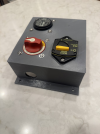
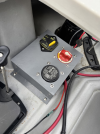
This is the little panel I 3D printed that has the battery switch, the ACR and a circuit breaker for the house loads.
Last edited:
I always leave both batteries on. Never had an issue. Replaced the batteries after 7 years out of caution. Never had an issue running both. Same thing with a Harris I had before. Boat is in a Tennessee garage all winter without a trickle. Never once had a problem.
Used to run go-fasts in my young and dumb days. Same thing. Always ran both batteries all the time, even on twin big blocks.
I do turn the batteries off when we go back home from the lake house after a weekend, week, month...
Used to run go-fasts in my young and dumb days. Same thing. Always ran both batteries all the time, even on twin big blocks.
I do turn the batteries off when we go back home from the lake house after a weekend, week, month...
Vikingstaff
Moderator
Same as Tvande above. I just run on both with only a few exceptions over the year. There have been a few times where the day would almost certainly be spent beached up and I was running sound. I would switch to just bat #2 to insure motor start up later. However, these days, I basically bring a portable Bluetooth speaker if we will be beached all afternoon and just run bats 1+2.
Is it best? Not sure. Always conflicting advice, including from dealerships. Has it worked fine? Yup.
My only battery issues have come from issue with my Sea Legs: whether that was me learning the battery useage demands better early on, or equipment problems that caused a heavier draw, or simply forgetting to flip its inline circuit breaker when not in use to cut the constant background draw.
Is it best? Not sure. Always conflicting advice, including from dealerships. Has it worked fine? Yup.
My only battery issues have come from issue with my Sea Legs: whether that was me learning the battery useage demands better early on, or equipment problems that caused a heavier draw, or simply forgetting to flip its inline circuit breaker when not in use to cut the constant background draw.
Jack M
Moderator
I do exactley the same as Jeff .