Trailering

itchyrichie

New Member
Messages
2
Reaction score
3
Greetings! We traded for a 2575LX last year so this is our second season. We seem to struggle when taking out. The rear of the boat is almost always out of line on the bunks. We are considering additional guides near the back of the trailer. Any advice or guidance appreciated!
 
This is my first year with a Bennington 20'. I have the SAME issue! Will be following this thread.
 
i tried the guides, hated them. I end up trying to get the trailer as close to the dock as possible. Then i slide the bow on and strap it. Ive trained the wife or a few friends how to line up the rear with the trailer tail light as I pull forward slowly.
 
If the ramp is too steep it can be a pain as the noses of the toons will sit on the bunks but the middle and rear will have a foot or three of water underneath it. Guides can help.

If you powerload that can help get more of the toon on the bunks to start and the tail from getting too squirrelly, but many ramps don't allow that or you may not have sufficient HP.

Just take it slow and don't be afraid to get wet. Nothing wrong with getting the bow set, pulling up a little then pushing the rest of the boat onto the bunks. Additional hands are a bonus as are extra dock lines.
 
I am not a loading expert, but It really helps to have two people working together.
The characteristics of the ramp also seem to make a big difference. A ramp out of level or shallow / steep may take different strategies.
I am not a fan of power loading but it really helps me with my bunk trailer. I back the trailer just far enough to slowly load the front toons partially up the bunks (and hook the strap). This seems to hold the front of the pontoon centered. Then we back the trailer in another 3 to 4 feet, depending on the water level, while trying not to float off the trailer(the front is still centered and somewhat anchored).

All the bunks are wet before loading and my bunk trailer has the plastic covering (no carpet).

Lastly, if the rear of the pontoon has moved out of alignment, due to wind or waves, I can crank the motor and adjust with just a little power to swing the back and over.
I have had my share of strange trailering over the last 30 years. Sometimes it was so out of alignment (especially in my non-pontoon years with a roller trailer) that I would back in the water and try to adjust. Not always fun if the ramp is crowded.
I also try to load during off peak times but recognize that may not be possible at some ramps.
 
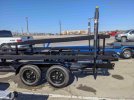
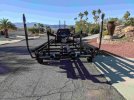
Slanted interior guide rails plus corner vertical guides is the answer - rarely an issue and on windy days, a dramatic improvements (though still difficult). These horizontal guides help keep the front end from blowing off the trailer.
 

Attachments

  • 2021-12-04 12.17.13 Trailer New Side.jpg
    2021-12-04 12.17.13 Trailer New Side.jpg
    152.4 KB · Views: 21
  • 2021-12-05 09.40.21.jpg
    2021-12-05 09.40.21.jpg
    212.9 KB · Views: 20
I'm a long time boater but this is my second season with a pontoon. I had similar issues at first adjusting to the differences between my pontoon and previous boats.

The biggest mistake I see most people make with all types of boats is putting the trailer in way too deep. Try not backing in as deep as your first, and easiest, solution. If you have to use excessive amounts of power or power loading isn't allowed, try going a little deeper to see if you find a sweet spot and take note of where the water level is on your trailer so you can repeat it in the future. You also don't need to power load until you you hit the stops on the trailer. Most of these boats can easily be winched that last couple of feet.

If you are in the water a little too deep, you can wind the boat to the stops on the trailer. They will somewhat help to keep the boat straight when you pull it out of the water as long as the bow eye is centered with your winch. The next thing that can help is how you pull the boat up the ramp. Try pulling it out of the water very slowly. As the front of the boat is centered in the bunks, it gives the boat the ability settle and center the rest of it.

In my case, our main ramp is long and steep. I have an adjustable drop hitch on my truck and I've marked 2 positions on the hitch. One is for road towing and it keeps the trailer level. For the ramp, I adjust the hitch so the trailer is about 6 to 8 inches nose down. This has drastically improved the ease of loading the boat and keeping it centered. For us it's not a big issue since it's about a 3 minute drive to the ramp at 30mph so it's not a big deal to town with it like that. If you would need to stop and readjust your hitch every time you unload and load, it would be a pain. At some point I'm going to see if I can adjust my trailer bunks so the boat sits more nose down instead of level in relation to the trailer.

If none of those work for you then guides are probably your answer.
 
Greetings! Following up on our first post. We added vertical guides between the toons near the rear of the trailer and stopped backing in as deep. I think the best advice (THANK YOU) is pulling out SLOWLY giving the rear of the boat a chance to settle in the bunks. Thank you all for your support and HAPPY BOATING!
 
Yep,
Loading a boat on the trailer is different for each boat, trailer, ramp, and more. Some boats, including Pontoons and Tri-toons, will sit differently in the water. The way they float and or are influenced by even small gusts of wind can frustrate even veterans of boating while trying to retrieve the boats back onto the trailer, seen it many times. Then there's the trailers themselves. Different types of guides work in various ways, with lots of variables. The primary issue for many boaters, especially newer boaters is the angle of the ramp. Here in lake Havasu AZ, we have about 6-8 different ramps with various angles. Some are way steep and some are fairly shallow angled.

To me, a shallower angled ramp is better for retrieval but not so good for launching. A shallower angled ramp allows for more of the boat to settle into the bunks earlier in the retreival process but not so much that the boat stops in its tracks, so to speak. You still have enough floatation to add a little bit of power to nudge the boat further into its home on the trailer because of the remaining ability of floatation. A steeper ramp causes the boat to hit harder into the bunks with just the front end but the back is still possibly 18" to 2' away from their seats. And due to that situation, there's not enough bunks capturing the straight on angle of the boat and hold it and if there's ANY side influence, like any gusts of wind or even smaller wakes from other boats nearby that are either launching or retrieving, your boat will be influenced by them and drift off its intended path.

There's a few styles of trailer boat guides out there. What I call the "Goal posts" (like the ones in foot ball fields) are preferred by lots of folks. They work but like many when it comes to pontoons and Tri-toons, they are limited in performance. Then there's center toon guides. And there's a few forms of those. Some are full length and will start to guide a pontoon or tri-toon almost immediately and keep it as centered as possible all the way onto the trailer. And that's a good thing. Again, the angle of the ramp, your speed, any outside influences, how your particular boat sits in the water vs how deep your trailer is and more will all make a difference in just how easily your boat glides back onto its trailer. And of course, LOTS of practice.
Scott

P.S. By the way, if you want to get ideas on what NOT to do or what TO DO in proper loading of many styles of boats, just go onto Youtube and look up Lake Havasu Ramps or any other boat ramp scenario. Lots of those videos are a crackup watching folks try and re-trailer their boats.

 
Back
Top