Corroding Throttle and Shift Cables

wjturnbill

Member
Messages
5
Reaction score
7
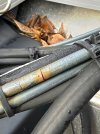
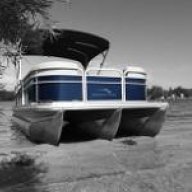
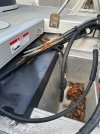
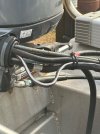
We have a 2023 Bennington 22LS with a Yamaha 200 motor. Our throttle and shift cables are already corroded between where they come out of the decking going to the engine. The outer casing appears to be cracked almost the entire section. (See photos). We now realize how lucky we are not to have had any issues this summer!!
We have two questions:
1) Should this have happened this quickly, or is it something that might be covered under warranty?
2) Is there anything we can do after we install the new cables to keep the new ones from corroding so quickly?

Added note: We are on the east coast in a saltwater environment.
 

Attachments

  • IMG_7127.jpeg
    IMG_7127.jpeg
    322 KB · Views: 29
  • IMG_7128.jpeg
    IMG_7128.jpeg
    263.4 KB · Views: 29
  • IMG_7129.jpeg
    IMG_7129.jpeg
    253.5 KB · Views: 28
Not sure if it would be the motor warranty, 3 yrs unless you extended it . Or it could be covered by the 10 yr Bennington warranty.
 
We have a 2023 Bennington 22LS with a Yamaha 200 motor. Our throttle and shift cables are already corroded between where they come out of the decking going to the engine. The outer casing appears to be cracked almost the entire section. (See photos). We now realize how lucky we are not to have had any issues this summer!!
We have two questions:
1) Should this have happened this quickly, or is it something that might be covered under warranty?
2) Is there anything we can do after we install the new cables to keep the new ones from corroding so quickly?

Added note: We are on the east coast in a saltwater environment.
Have you spoke to your dealer ? Is your Bennington a "Salt Water Series "
 
Great questions Jack. Same ones I have.

Those cables certainly look bad, but I don’t have any experience with salt water boating.
 
Have you spoke to your dealer ? Is your Bennington a "Salt Water Series "
We are headed to the dealer now. Will let you know what the outcome is. It is within the 3 yr warranty so we’re hoping either way, it will be covered. And yes, it is a Saltwater Series. Thank you for your replies!!
Have you spoke to your dealer ? Is your Bennington a "Salt Water Series "
 
That is very strange and looks like a serious failure. Glad that you have coverage.

Given the number of saltwater Yamaha motors, strange that it would even occur in the first place. I wonder if they have different rigging cables for saltwater and maybe the wrong units were installed. We will probably never know.
 
Dealer is filing a warranty claim with Yamaha and they should cover it. We’ll keep you posted! Thank you again for your input! Otherwise, we may have spent $ and who knows how much time, trying to replace them ourselves.
Thats good news
 
Totally echoing what Pbakk said above. Glad you have motor coverage and it should all get straightened out that way.
 
Wow that’s crazy how bad they rusted and split the sheathing. WOW!!!
 
I have a 2014 that has been used in salt water the last 8 years and mine look brand new compared to yours!
 
I was curious about this topic so for what it is worth, below is the AI answer regarding differences between saltwater and freshwater motor rigging. If this is true, you may want to check the electrical wiring in other areas of the boat and look for corrosive issues. Hopefully no other issues are identified.

Key differences for saltwater cables:
  • Materials: Saltwater control cables often incorporate stainless steel fittings and internal components, or are made with other protective coatings, to withstand the harsh conditions. Freshwater components use less resistant materials like galvanized steel or aluminum, which would corrode quickly in a saltwater environment.
  • Wiring: Marine-grade electrical wiring, essential for saltwater use, features individually tinned copper strands to prevent corrosion from spreading under the insulation if any spot is exposed. Automotive-grade wiring or non-tinned copper is not sufficient for frequent saltwater exposure.
  • Protection: Saltwater cables have specialized, durable outer jackets designed to guard against chafing, salt intrusion, and UV exposure. Sealed electrical connectors are also crucial for saltwater systems.
 
Back
Top